




PPWR is about to take effect, and exports of ATEX lamps face LUCID compliance requirements
On August 12, 2026, the EU PPWR regulations will come into full effect. Packaged products sold to the EU need to complete the packaging EPR registration of the corresponding country, and ATEX explosion-proof lamps are also included. For exporters shipping to markets such as Germany and France, packaging compliance, German LUCID binding, and whether non-local companies need to designate an authorized representative in Germany are directly related to the shipping path, shelf status, and delivery timeliness.
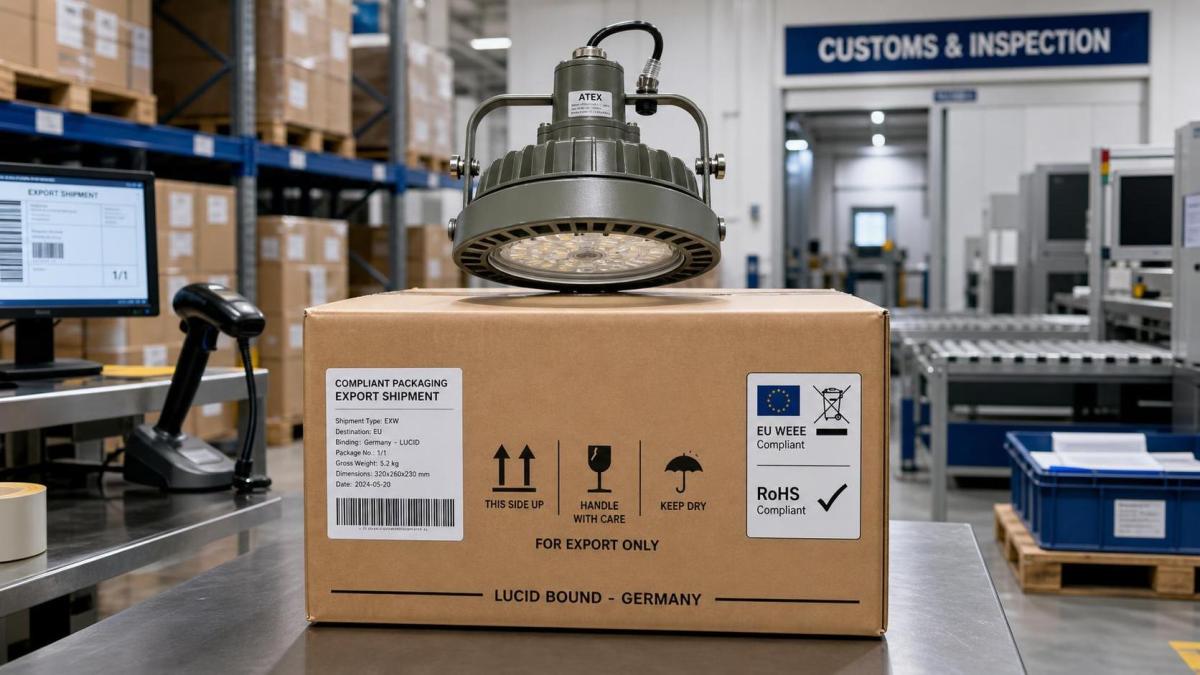
After PPWR officially comes into effect, packaging EPR is no longer optional
According to known information, the EU PPWR regulations will be fully effective from August 12, 2026. All packaged products sold to the EU need to complete the packaging EPR registration of the corresponding country, and ATEX explosion-proof lamps are also within the scope of application.
Germany’s requirements are more specific: non-local companies need to designate an authorized representative (AR) in Germany and complete the binding in the LUCID system. Entities that fail to comply with the requirements may face consequences such as removal from Amazon shelves, detention by customs, and ban from the market.
Multiple links in the export chain will be recalibrated
The delivery rhythm of direct export companies will be affected first
For exporters of explosion-proof lighting equipment that ship directly to EU customers, the most directly affected is not the product itself, but the registration and binding process corresponding to the packaging. As long as the product enters the EU market with packaging, compliance certificates and system binding will become prerequisites before shipment, and the shipping rhythm originally promoted by orders may need to be rearranged.
Platform sellers and channel merchants will be more sensitive to listing risks
From an industry perspective, the risk of Amazon delisting means that platform sales channels will transmit compliance pressure to sellers more quickly. For companies that rely on platforms to acquire customers, LUCID binding, AR arrangements and registration status are no longer just paperwork, but operational links that directly affect whether products can continue to be sold.
Logistics and customs declaration cooperation will also rely more on pre-information
If the packaging EPR registration, authorized representative or binding status is incomplete, delays may occur in both the customs link and the cross-border logistics link. For companies that ship to countries such as Germany and France, fluctuations in delivery time do not necessarily come from the production side, but may also come from insufficient preparation of compliance documents.
What practical points should companies focus on now
First confirm whether the target market has been included in the actual delivery list
For companies that have shipped to the EU, the most important thing to check at present is the actual delivery route in key markets such as Germany to confirm which products are packaged products and which orders have entered the scope of application of PPWR and packaging EPR.
Verify again whether the binding of AR and LUCID is truly completed
Germany clearly requires that non-local enterprises need to designate an authorized representative in Germany and bind it in the LUCID system. Enterprises should focus on checking whether the registration status, binding status and applicable requirements of the corresponding market are consistent to avoid only completing part of the action but failing to meet the actual delivery conditions.
Move document preparation forward to the order confirmation stage
For export companies and supply chain service providers, it is best to confirm packaging-related information, registration information and customer communication before placing an order, rather than waiting to supplement the parts before shipment. Otherwise, the question is often not "can it be sold?" but "can it be delivered on time?"
Continue to pay attention to whether there are further refinements in the official caliber.
The current information has clearly released an enforcement signal, but the requirements of different member states in terms of enforcement details are still worthy of continued observation. Enterprises need to track subsequent official statements, especially enforcement standards directly related to key markets such as Germany and France.
This is more like an execution signal, not just a policy reminder.
Analysis shows that the focus of this information is not only the time point when PPWR enters into effect, but that packaging EPR begins to truly affect the cross-border shipping chain. It shows that EU packaging compliance has moved from the "preparation stage" to the "execution stage". What enterprises face are not abstract rules, but practical constraints that will directly affect shelf placement, customs clearance and delivery.
From an industry perspective, this is better understood as a compliance signal that requires continuous follow-up, rather than one-time news. For ATEX explosion-proof lighting exporters, the real variable is not the product technology itself, but whether packaging compliance has been embedded in daily order management.
This should currently be regarded as an upgrade to the compliance threshold
Overall, after PPWR takes effect on August 12, 2026, the export path of ATEX explosion-proof lamps to the EU will obviously rely more on packaging EPR registration, German LUCID binding, and AR arrangements. For relevant companies, this is not just a policy background, but a realistic threshold that has begun to affect the fulfillment process. At present, it is more appropriate to understand it as an industry change that has entered the enforcement level, while continuing to observe the enforcement details of each member country.
Source of information this article is based on
This article is generated based on the information title, event time and event summary provided by the user. Types of sources typically associated with this information include official announcements, corporate announcements, industry association information, authoritative media reports, and standards organization documents. Since no specific official source link is provided in the input, this article cannot list the verifiable original link. It is still necessary to continue to verify the German LUCID binding requirements, authorized representative arrangements, and enforcement details of each member country in the future.
Related News
Get weekly intelligence in your inbox.
No noise. No sponsored content. Pure intelligence.
