




Advanced Emergency Rescue Technology Trends Shaping 2026 Response Planning
Why advanced emergency rescue technology is becoming central to 2026 planning
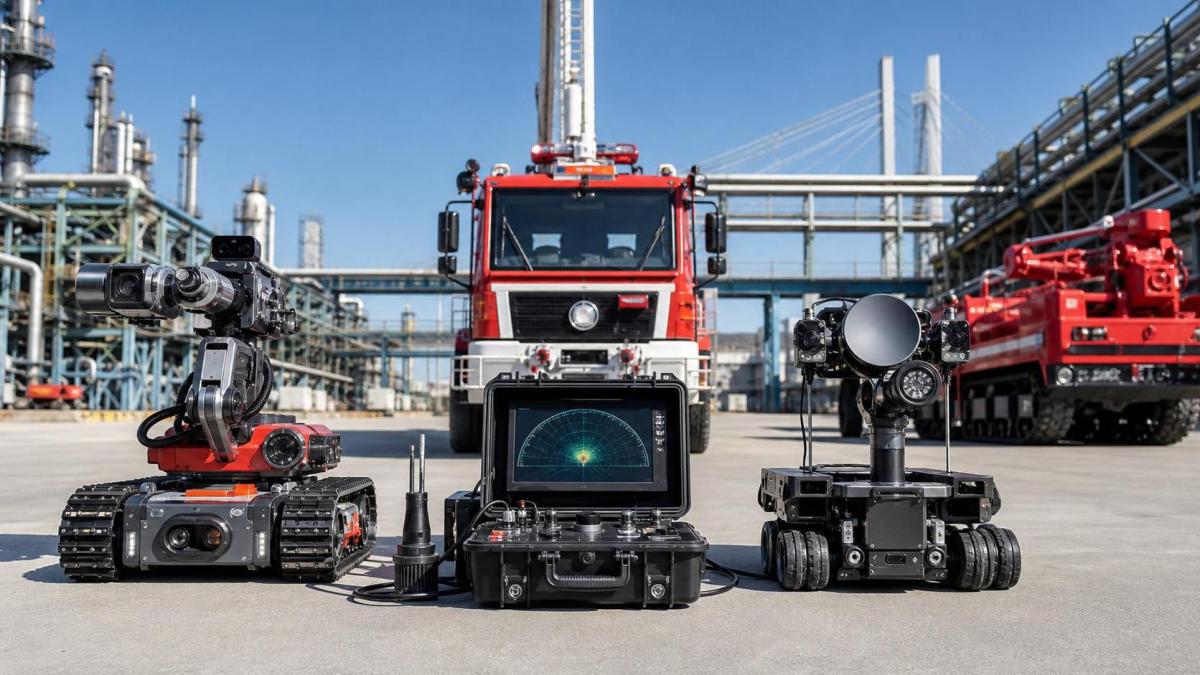
Emergency response planning is entering a more measurable phase.
Budgets are no longer guided only by replacement cycles or headline incidents.
They are increasingly shaped by operational data, certification pressure, cross-agency coordination, and higher expectations for mission continuity.
That shift is pushing advanced emergency rescue technology from specialist upgrade into a core planning topic for 2026.
The change is visible across firefighting robots, life detection radar, hydraulic rescue tools, explosion-proof systems, protective equipment, and counter-UAS platforms.
What matters now is not simple access to equipment.
What matters is whether advanced emergency rescue technology can perform reliably in complex, high-risk environments.
In practical terms, planning teams are asking harder questions.
Can a rescue robot operate in heat, smoke, and unstable terrain?
Can UWB life detection systems reduce false positives in rubble?
Can 700-bar hydraulic tools hold pressure consistency after repeated field deployment?
Can counter-UAS systems work without disrupting nearby operations?
This is where market attention has become more disciplined.
The conversation is moving away from broad capability claims and toward validated performance, interoperability, maintenance burden, and compliance readiness.
The strongest market signals are coming from risk exposure and system integration
From recent demand patterns, one signal stands out clearly.
End users want fewer isolated tools and more connected response ecosystems.
Advanced emergency rescue technology is now evaluated as part of an operational chain, not as a standalone device.
A firefighting robot may need to link with command systems.
A border surveillance sensor may need to feed into counter-UAS response logic.
A hydraulic rescue platform may need compatibility with vehicle extrication kits already in service.
The broader reason is easy to understand.
Response environments have become denser, faster, and less predictable.
Industrial fires, urban collapse, airport disruption, hazardous material incidents, and unauthorized drone activity now overlap with digital command requirements.
That means advanced emergency rescue technology must support both field action and information flow.
More noticeably, evaluation teams are treating downtime as a strategic risk.
That is changing how advanced emergency rescue technology is compared across suppliers and categories.
Why the technology stack is evolving faster than many planning cycles
Several drivers are accelerating this market at the same time.
They are technical, regulatory, and operational rather than purely commercial.
- Automation is becoming practical in hostile zones where human exposure carries unacceptable cost.
- Sensor quality is improving, especially in life detection, thermal imaging, and radar discrimination.
- Explosion protection and ballistic standards are shaping product design earlier in development.
- Border security and airspace protection are merging with emergency planning in critical infrastructure sites.
- Digital command expectations are raising the importance of software compatibility and data integrity.
This combination explains why advanced emergency rescue technology now looks broader than traditional rescue equipment.
It spans robotics, protective materials, explosion-proof engineering, radar, RF systems, and command integration.
Platforms such as SESS are gaining relevance because this convergence is difficult to track through isolated supplier channels.
When one portal connects firefighting vehicles, rescue sensors, ballistic protection, anti-drone systems, and compliance intelligence, market judgment becomes more grounded.
That matters in 2026 planning, where the real challenge is comparison across technologies that solve related risks in different ways.
Demand is shifting from headline performance to field reliability
A notable change in buyer behavior is the decline of purely headline-driven evaluation.
Maximum range, peak pressure, or lab-tested protection level still matter.
But they matter less when unsupported by repeatable field performance.
In rescue robotics, mobility under debris, endurance, control latency, and recovery after signal interruption are now central issues.
In life detection systems, the discussion increasingly turns to clutter filtering, search speed, and operator interpretation burden.
In ballistic protection, the focus is expanding from nominal threat level to weight management, durability, and wear-time practicality.
For explosion-proof equipment, the market is paying closer attention to enclosure design, ignition prevention logic, and maintenance discipline.
This is why advanced emergency rescue technology is increasingly judged through lifecycle evidence.
A capable system that becomes difficult to maintain, recalibrate, or certify is losing appeal.
That logic extends across ladder trucks, rescue vehicles, ceramic armor, RF interference systems, and hydraulic cutting tools.
In each case, resilience under routine stress is becoming more valuable than impressive specification sheets.
The impact is spreading across emergency, industrial, and security environments
Advanced emergency rescue technology is no longer limited to classic fire and rescue departments.
Its impact is spreading into industrial safety, airport operations, critical infrastructure defense, and border monitoring.
That expansion is important because it changes the market’s volume, standards, and integration demands.
Where the pressure is most visible
Hazardous industrial sites are prioritizing explosion-proof lighting, flameproof electrical systems, and remotely operated firefighting support.
Urban response units are looking harder at robotics, life detection radar, and high-pressure extrication systems.
Airports and infrastructure operators are combining rescue readiness with counter-UAS and perimeter awareness requirements.
Security-focused deployments are aligning ballistic protection with command mobility and incident continuity planning.
The result is a wider competitive field for advanced emergency rescue technology.
However, it also creates more complex comparison work because use cases are no longer isolated.
A single site may need rescue, surveillance, blast mitigation, and drone defense capabilities that can operate within one command picture.
What deserves closer attention before 2026 budgets are locked
The next phase of planning should be less about chasing novelty and more about filtering risk.
Advanced emergency rescue technology should be reviewed through a narrower set of practical questions.
- Does the system solve a rising operational exposure that current assets cannot manage safely?
- Is certification current, relevant, and recognized in the intended deployment market?
- Can the technology exchange data or coordinate actions with existing command structures?
- What does lifecycle support look like over training, calibration, software updates, and spare parts access?
- Are field case references credible in conditions similar to the actual mission environment?
Those questions help separate strategic capability from short-term attraction.
They also explain why intelligence-led evaluation platforms are becoming more useful.
SESS sits in that space by organizing technical analysis, standards context, application cases, and supplier visibility around mission-critical equipment.
That kind of structure supports more balanced decisions without turning the process into a narrow product comparison exercise.
The next market winners may be those that reduce uncertainty, not just add features
Looking ahead, the advanced emergency rescue technology market appears set to reward clarity over complexity.
Suppliers that can prove durability, certification readiness, maintainability, and integration maturity will likely gain ground.
The same applies to technologies that reduce crew exposure without creating new software or training burdens.
From that perspective, 2026 planning is less about buying more equipment.
It is about building a response architecture that performs under pressure and remains supportable over time.
A practical next step is to map current operational gaps against a short list of advanced emergency rescue technology categories.
Then compare each category by certification, interoperability, field reliability, and lifecycle demand.
That approach makes trend analysis useful because it connects market movement to decisions that can actually be defended.
In a high-stakes environment, that is usually the most valuable form of readiness.
- anti-drone systems
- explosion-proof equipment
- life detection systems
- hydraulic rescue tools
- RF interference systems
- ballistic protection
- rescue tools
- firefighting vehicles
- rescue vehicles
- counter-UAS systems
- explosion-proof lighting
- ladder trucks
- flameproof electrical systems
- firefighting robots
- life detection radar
- vehicle extrication
- UWB life detection
- emergency response planning
- emergency rescue technology
- explosion-proof engineering
- advanced emergency rescue technology
Related News
Get weekly intelligence in your inbox.
No noise. No sponsored content. Pure intelligence.
